Shop operations
How do you keep track of where jewellery, watches and repairs are held?
Name your storage and working locations clearly, assign each piece to the right place and update the record when it moves. A location is useful only while it agrees with the physical stock.
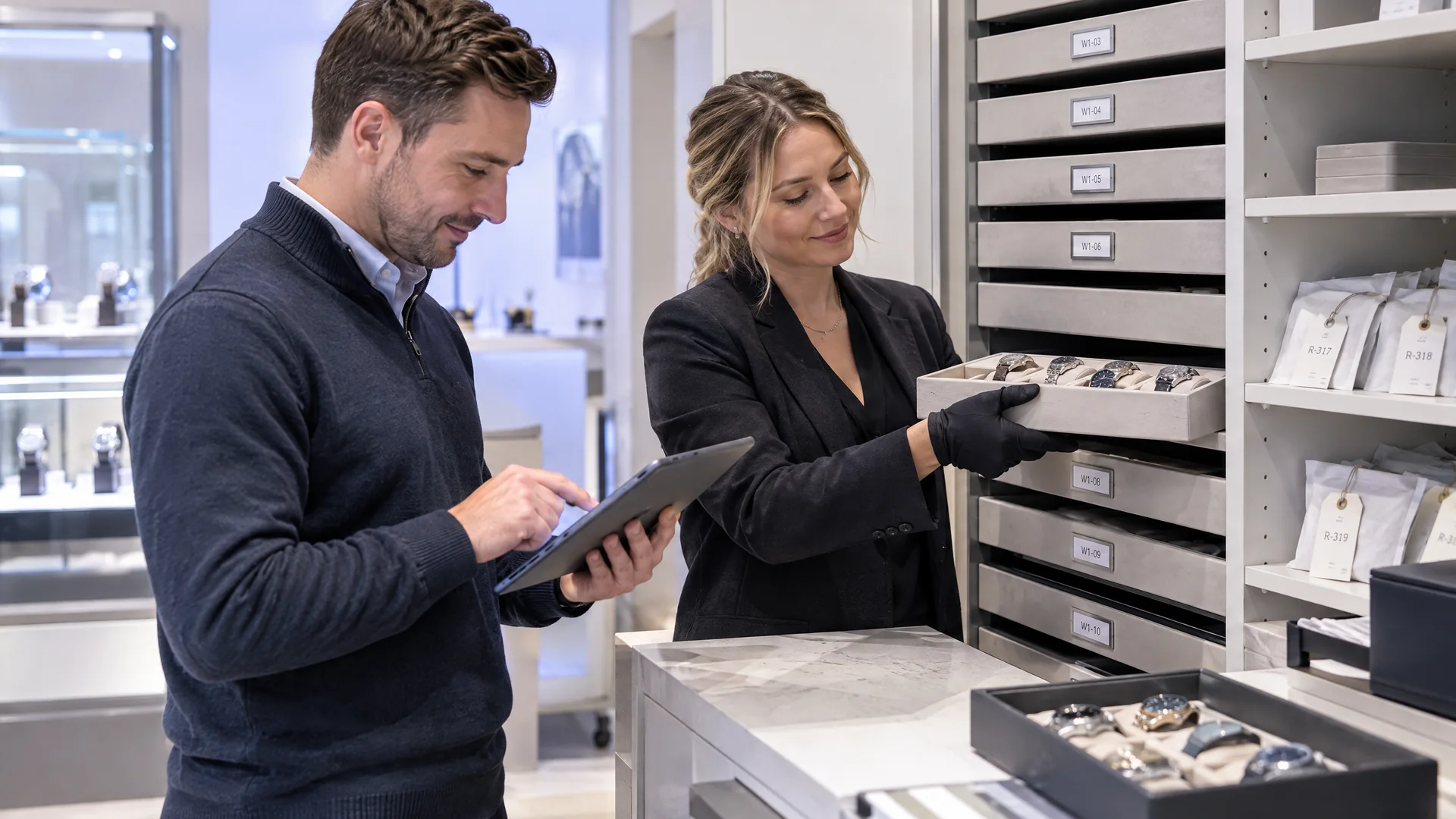
A customer wants to see a watch shown online. One colleague thinks it is in the safe; another remembers it going upstairs for photographs. The search interrupts two jobs because the movement was understood at the time but never recorded.
Use locations people can recognise
Create a structure that matches your premises and work. “Upstairs” may be enough in a small shop, or it may hide several benches, cabinets and storage areas. Add detail where it helps somebody find the piece, without making every movement a complicated administrative exercise.
Agree the names used in your . If the team calls a cabinet by one name and the system calls it something else, errors are likely to become routine. Keep product storage and repair destinations understandable to the people using them.
- Name the places where stock is actually held.
- Distinguish sale stock from pieces awaiting work.
- Agree who records a move between locations.
- Use parent locations when a larger area needs subdivisions.
A recorded location is not a security guarantee or a substitute for physical checks. It is a shared instruction about where the team expects to find something. Treat a mismatch as a question to resolve, rather than quietly choosing whichever location seems most likely.
See it in Stockbox
The locations recording creates product or repair locations, sets an internal location and shows a parent relationship. It then assigns a location to a product record.
Make movement part of the handover
Update the at the point of transfer. If a watch goes from the safe to photography, the person receiving it should know what arrived and the record should reflect the move. Waiting until closing time makes it easier to forget a temporary change.
The same habit matters when a repair leaves the counter for a workshop. Record the destination and keep the job reference attached to the piece. Location tells you where to look; the repair record tells you what is meant to happen there.
For example, a piece ready for collection should be moved into the agreed collection area once that physical move has happened. A status change on its own does not put the item in the right drawer.
Check the habit, not just the list
- Sample a few records and find the physical pieces.
- Resolve locations that staff interpret differently.
- Remove unused choices after checking affected stock.
- Include location updates in photography and workshop handovers.
Clear locations reduce unnecessary searching and help colleagues answer customers with confidence. The benefit comes from a simple habit repeated consistently, rather than from creating a more detailed list than the shop can maintain.