Sales & customers
How should a jewellery shop handle deposits and part exchanges?
Record the selling price, part-exchange allowance, payments received and balance separately. Then record when the customer can receive the item. A tidy invoice cannot replace a clear agreement at the counter.

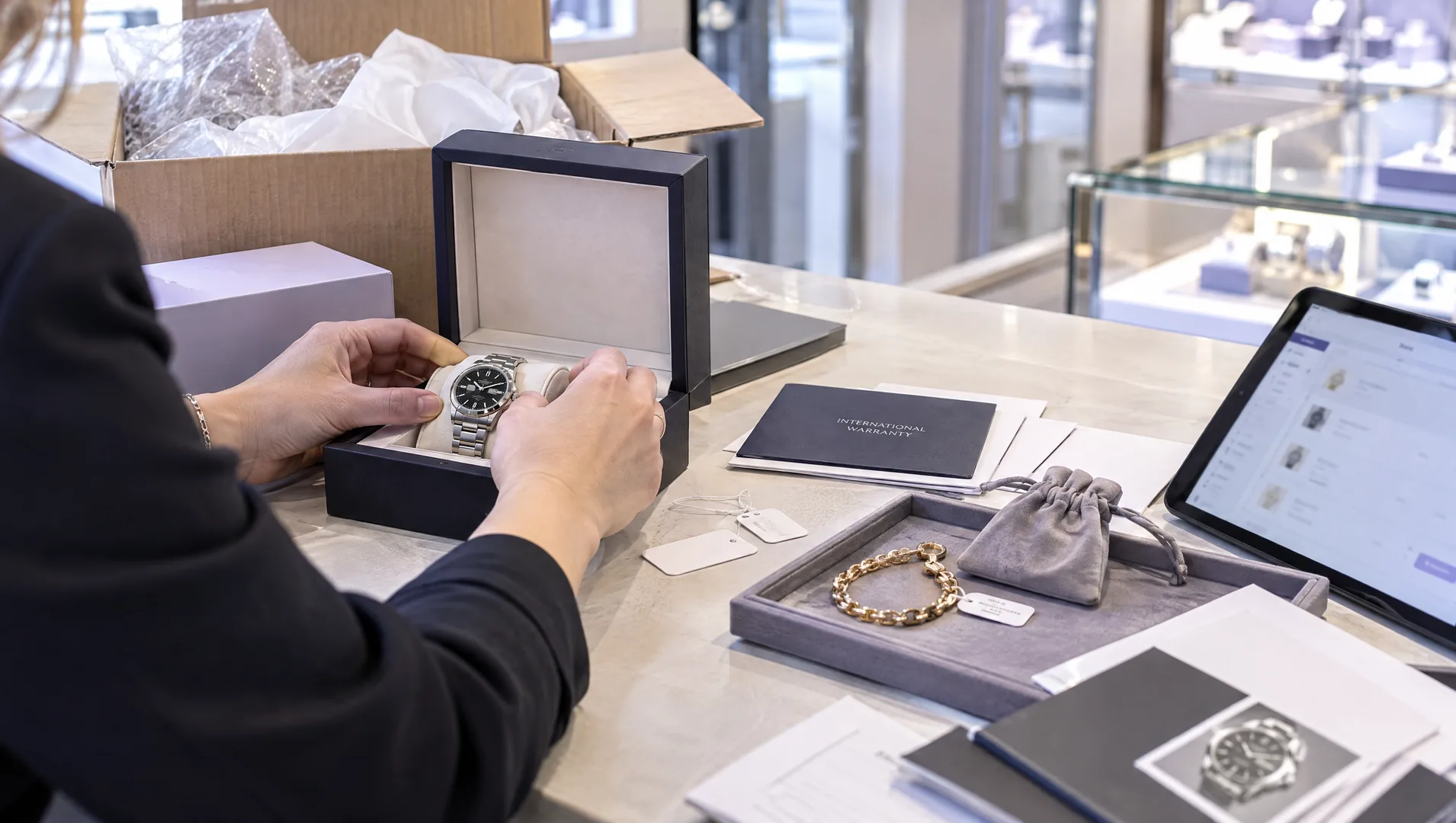
A customer chooses a watch, offers their old one in part exchange and pays a deposit while arranging a bank transfer. It is one sale, but several facts need checking. Confusing the allowance with a payment can leave a colleague unsure how much is still owed.
Explain the figures before taking payment
Write down the price of the item being sold and the agreed value of the item coming in. Identify the incoming piece properly, including its condition and accessories. Make clear whether the offer depends on an inspection. The customer and the shop should be working from the same figures.
Use a entry to keep the incoming item with the order. That does not replace your inspection or buying judgement. If a watch needs further checks, explain how that affects the agreement before someone assumes the allowance is final.
- Confirm the selling price and any agreed adjustment.
- Identify the part-exchange item and the allowance separately.
- Record the deposit, remaining balance and collection or dispatch arrangement.
A small deposit may reserve a piece, but your shop still needs a consistent reservation policy. Tell the customer how long you will hold it and what happens if their plans change. Make the agreement easy for the next shift to find.
See it in Stockbox
Watch an order being created with a part exchange and more than one payment method. Notice that payment details and the goods status are separate decisions.
Keep promised payments apart from received payments
A customer saying a transfer is on its way is useful information, but it is not confirmation that the money has arrived. Record what you can verify. When different payment methods are used, reconcile each amount to the order rather than leaving a single note saying “paid”.
can give a customer a way to pay away from the shop. Agree which order the link relates to and the amount requested. Check the resulting payment record before authorising the handover; a sent request should not be mistaken for a completed payment.
For dispatch, confirm the delivery details and any outstanding preparation before moving the order forward. For collection, make sure the colleague on duty knows which accessories and documents must leave with the item. Those small details shape the customer’s last impression of the sale.
Before the goods leave
- Check the order balance against confirmed receipts.
- Confirm the part-exchange agreement and the incoming item’s record.
- Check the fulfilment status, destination and accessories.
Review incomplete orders regularly. A clear balance and next action let your team follow up properly, without asking the customer to explain the deal again.